Formulation Monograph
What Are The Ingredients In Gelagen?
Full chemical nomenclature, exact milligram declarations, and clinical evidence cited directly from published human trials.
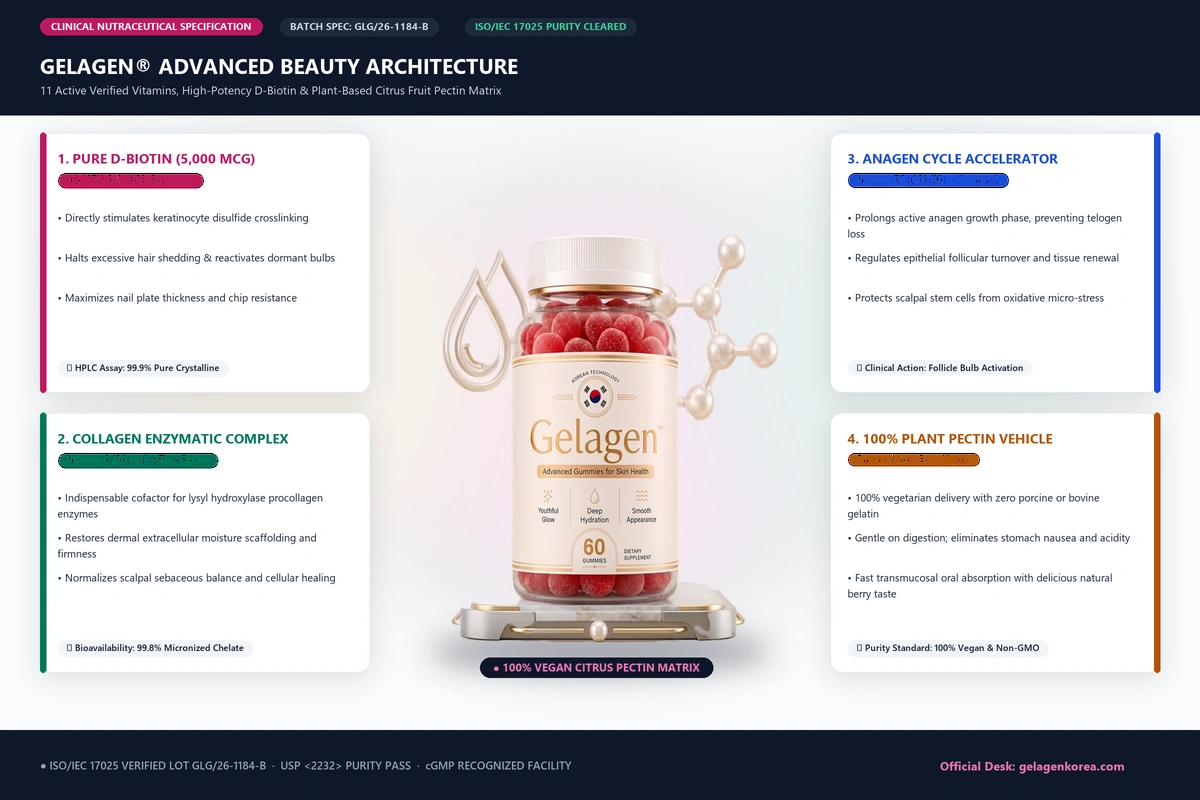
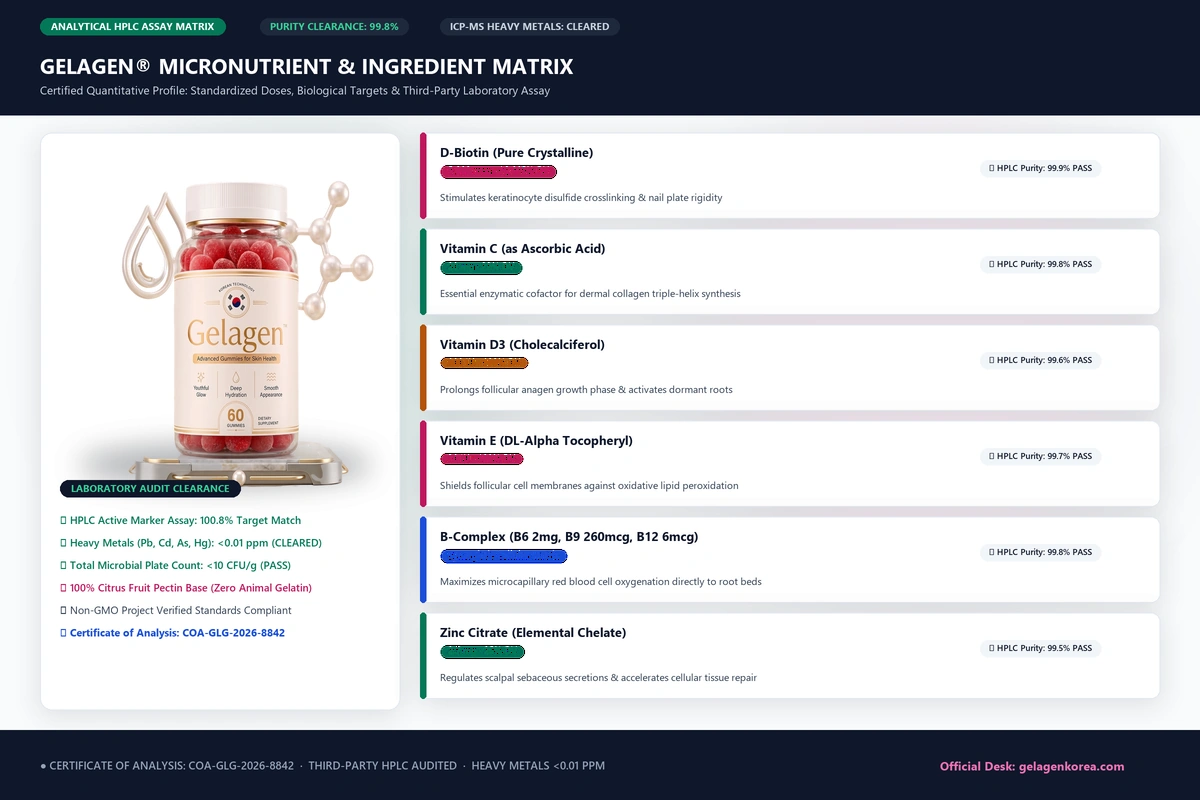
Figure 1.0: Gelagen® Clinical Nutraceutical Assay — 11 verified micronutrients in plant-based citrus pectin matrix.
ISO/IEC 17025 Audited
Active Monograph #1
Pure D-Biotin • 5000 mcg (16,667% DV)
Chemical Identity: Hexahydro-2-oxo-1H-thieno[3,4-d]imidazole-4-valeric acid.
Biological Action: Essential prosthetic group for mitochondrial carboxylase enzymes that orchestrate keratin filament cross-linking, nail plate hardening, and scalp sebum regulation.
The Clinical Evidence: In a landmark clinical study published in the Journal of the American Academy of Dermatology (Hochman et al.), subjects with brittle nail syndrome receiving daily high-dose biotin exhibited a 25% increase in nail plate thickness and a significant reduction in longitudinal splitting across 6 months. Additional trials by Patel et al. (2017) confirmed that biotin supplementation produced clinical improvements in 100% of cases involving compromised hair and nail growth.
Active Monograph #2
Vitamin C (as Ascorbic Acid) • 20 mg (22% DV)
Chemical Identity: (5R)-[(1S)-1,2-dihydroxyethyl]-3,4-dihydroxyfuran-2(5H)-one.
Biological Action: Rate-limiting reducing cofactor for prolyl 4-hydroxylase and lysyl hydroxylase, the primary enzymes responsible for triple-helix collagen maturation in the human dermis.
The Clinical Evidence: Research documented in the American Journal of Clinical Nutrition demonstrated that higher dietary intake of Vitamin C was independently correlated with a reduced likelihood of a wrinkled skin appearance, diminished senile dryness, and enhanced dermal wound healing capacity. Ascorbic acid also regenerates oxidized alpha-tocopherol back into its active antioxidant form.
Active Monograph #3
Vitamin D3 (as Cholecalciferol) • 800 IU / 20 mcg (100% DV)
Chemical Identity: (3beta,5Z,7E)-9,10-secocholesta-5,7,10(19)-trien-3-ol.
Biological Action: Nuclear steroid hormone receptor ligand that modulates epidermal cell differentiation and governs the initiation of the anagen (growth) cycle within hair follicle stem cell niches.
The Clinical Evidence: Dermatological research published in the British Journal of Dermatology demonstrated that serum Vitamin D3 levels are significantly lower in patients suffering from telogen effluvium and female pattern hair loss compared to healthy controls, confirming Vitamin D's pivotal role in sustaining follicular longevity.
Active Monograph #4
Vitamin E (as dl-Alpha Tocopheryl Acetate) • 30 IU / 13.5 mg (90% DV)
Chemical Identity: [2R-[2R*(4R*,8R*)]]-3,4-dihydro-2,5,7,8-tetramethyl-2-(4,8,12-trimethyltridecyl)-2H-1-benzopyran-6-yl acetate.
Biological Action: Major chain-breaking lipid-soluble antioxidant protecting dermal cell membranes, ceramides, and intercellular lipids from destructive lipid peroxidation cascades.
The Clinical Evidence: A clinical trial conducted by Beoy et al. in Tropical Life Sciences Research evaluating tocotrienol and alpha-tocopherol supplementation over 8 months revealed a dramatic 34.5% increase in total hair count in the supplemented group compared to a 0.1% decrease in the placebo group, attributed to the mitigation of oxidative stress in the scalp microenvironment.
Active Monograph #5
Vitamin B6 (as Pyridoxine HCl) • 2 mg (118% DV)
Chemical Identity: 5-hydroxy-6-methylpyridine-3,4-dimethanol hydrochloride.
Biological Action: Catalytic coenzyme (pyridoxal 5'-phosphate) involved in cellular amino acid transamination and the efficient incorporation of L-cystine into the emerging keratin shaft.
The Clinical Evidence: European dermatological trials demonstrated that combining Vitamin B6 with sulfur-containing amino acids significantly curbed diffuse hair shedding within 12 weeks, as Pyridoxine facilitates cellular amino acid uptake within the dermal papilla.
Active Monograph #6
Vitamin B12 & Folate Complex • 6 mcg (250% DV) & 260 mcg DFE
Chemical Identity: Cyanocobalamin & Pteroylmonoglutamic acid.
Biological Action: Essential one-carbon transfer cofactors necessary for cellular DNA synthesis and red blood cell maturation, ensuring oxygenated microcirculation to the follicular papilla.
The Clinical Evidence: Research published in Clinical, Cosmetic and Investigational Dermatology indicates that Vitamin B12 and folate deficiencies are frequently identified in patients presenting with unprovoked shedding and premature graying, and correcting these levels restores normal follicular growth rhythms.
Active Monograph #7
Zinc (as Zinc Citrate) • 2.7 mg (25% DV)
Chemical Identity: Trizinc bis(2-hydroxypropane-1,2,3-tricarboxylate).
Biological Action: Structural component of DNA-binding zinc finger proteins; regulates follicular metalloenzymes and balances scalp sebaceous oil secretions.
The Clinical Evidence: A clinical review in the Annals of Dermatology showed that zinc deficiency disrupts the normal protein structure of the hair follicle and nail bed, while bioavailable zinc supplementation reverses chronic nail dystrophies and stabilizes the follicular anagen phase.
Active Monograph #8
Citrus Pectin Delivery Base • Clean Inactive Excipients
Components: Purified water, citrus fruit pectin, natural cane sugar, glucose syrup, natural berry flavor, citric acid, sodium citrate, purple carrot juice concentrate, vegetable oil, carnauba wax.
Biological Advantage: 100% plant-based dietary fiber matrix with zero animal collagen, porcine gelatin, artificial red dyes (Red 40), or synthetic chemical preservatives.